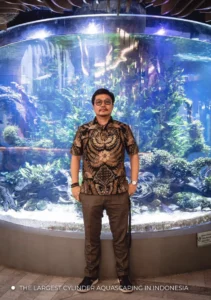
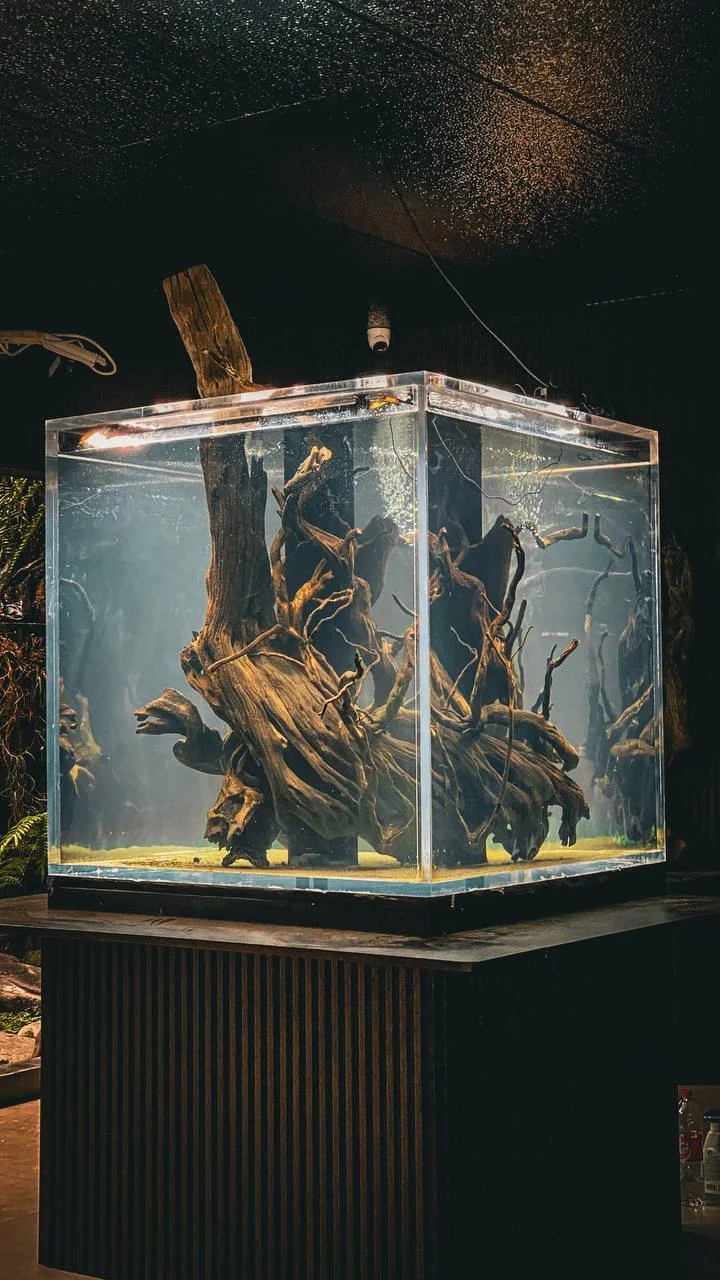
An aquarium can be more than a beautiful feature within a building. When thoughtfully designed, it can become the identity of a space, shape visitor experiences, and transform an ordinary environment into a memorable destination.
For Indo Akuarium, this idea has been at the heart of its approach to aquarium design since 2000. By combining artistic vision, engineering, landscape design, and an understanding of aquatic ecosystems, the company creates bespoke environments designed around the character and purpose of each project.
More Than a Decorative Element
Traditional aquariums are often viewed as decorative features. They occupy a particular space and provide an attractive focal point for visitors or residents.
Large-scale aquarium design offers a much greater possibility.
An aquarium can become part of the architecture itself. It can define a restaurant, become the centerpiece of a luxury residence, create a signature experience within a hotel, or become one of the defining attractions of a public destination.
This requires a different approach to design.
The aquarium must be considered from the beginning as part of the overall environment rather than being added after the architecture has been completed.
Designing Around the Experience
Every successful aquatic environment begins with a question:
What should people feel when they experience this space?
The answer influences everything from the composition of the underwater landscape to lighting, viewing angles, scale, movement, and the relationship between the aquarium and surrounding architecture.
A residential aquarium might be designed to create a sense of tranquility and become a living centerpiece within the home.
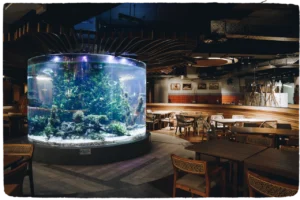
A restaurant aquarium may be designed to create an unexpected dining experience.
A public aquarium may focus more strongly on education, biodiversity, and visitor engagement.
The purpose may be different, but the principle remains the same: the aquarium should become part of the experience.
Creating Unique Aquatic Environments
Indo Akuarium believes that every project should have its own identity.
Rather than reproducing the same design across different locations, the company develops concepts according to the project’s architecture, environment, function, and story.
This philosophy has resulted in various distinctive concepts, including The Habitats, Horizon Reef, The Cliff Spring, The Swamp Forest, Aquascape, and Rain Forest Terrarium.
Each concept explores a different relationship between water, landscape, architecture, and living organisms.
The result is an aquatic environment that feels integrated rather than simply installed.
When Scale Becomes Part of the Story
Scale can fundamentally change how people experience an aquarium.
A small aquarium can invite someone to observe details closely. A monumental aquarium can create an entirely different emotional response.
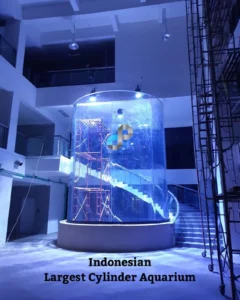
Indo Akuarium’s landmark projects demonstrate how scale can become part of the architectural experience.
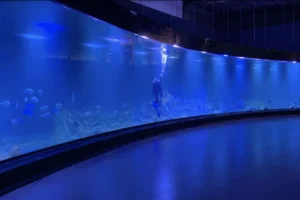
Aquarium Indonesia Pangandaran, for example, features a 47-meter freshwater aquarium and represents an ambitious approach to creating an immersive aquatic environment.
Meanwhile, The Sea Cathedral Jakarta explores verticality through an 8-meter residential aquarium, turning the aquatic environment into a dramatic architectural feature.
Another distinctive example is The Poseidon’s Table Jakarta, where the aquarium becomes part of a teppanyaki dining environment.
These projects demonstrate that the possibilities of aquarium design extend far beyond conventional displays.
Art Meets Engineering
Creating a visually impressive aquarium is only one part of the challenge.
Behind every large-scale aquatic installation is a complex combination of engineering, material selection, water management, structural considerations, lighting, filtration, and long-term maintenance.
This is where artistic vision needs to work together with technical expertise.
A concept may look extraordinary on paper, but it must also be engineered to function reliably as a living ecosystem.
Indo Akuarium approaches this process through integrated services covering design and build, acrylic manufacture, landscape design, and aquarium maintenance.
This allows creative concepts to be considered together with the practical requirements needed to maintain them over time.
Designing for Long-Term Value
A landmark project should not only create an impressive first impression.
It should continue delivering value long after the opening day.
For commercial and hospitality projects, an extraordinary aquarium can become a memorable element of the visitor experience. For residential projects, it can transform the character of an interior. For public destinations, it can become an attraction that encourages visitors to return.
But long-term value also depends on operational efficiency.
An aquarium that is difficult or expensive to maintain can become a burden over time. Therefore, maintenance considerations should be incorporated into the design from the beginning.
The goal is to create an environment that balances beauty, performance, sustainability, and practicality.
Bringing Nature Into Architecture
One of the most powerful qualities of an aquarium is its ability to introduce a living element into an architectural environment.
Buildings are created through concrete, steel, glass, and engineered materials.
Aquariums introduce something different: movement, growth, life, and natural variation.
Fish move continuously.
Plants grow and change.
Light behaves differently beneath the water.
The landscape evolves.
These characteristics make an aquarium fundamentally different from static architectural decoration.
It is a living component of the space.
A New Perspective on Aquatic Experiences
As architecture and hospitality continue to evolve, people increasingly seek experiences rather than simply physical spaces.
A hotel is no longer only a place to stay.
A restaurant is no longer only a place to eat.
A destination is no longer defined solely by its buildings.
Experiences create memories.
Aquatic environments can play an important role in creating those experiences because they combine visual beauty, movement, nature, and discovery in a single environment.
This is where aquarium design can move beyond decoration and become part of a broader architectural and experiential strategy.
The Future of Aquarium Design
For Indo Akuarium, the future lies in continuing to explore the relationship between art, technology, architecture, and nature.
The company’s vision extends beyond individual installations through Aquaworld of Indonesia—an ambition to bring the beauty of the underwater world closer to people while creating greater awareness of Indonesia’s extraordinary aquatic heritage.
Through this vision, aquatic environments can become more than attractions.
They can become places for education, inspiration, exploration, and connection with nature.
Because when people experience the beauty of an ecosystem, they may begin to understand why it deserves to be protected.
Designing the Next Landmark
A truly memorable aquarium does not simply occupy a space.
It transforms the way people experience that space.
From private residences to hospitality, commercial developments, and landmark destinations, the possibilities continue to expand when aquarium design is approached as a combination of architecture, art, engineering, and living ecosystems.
At Indo Akuarium, every project begins with a unique vision and the belief that nature remains the greatest teacher.
The goal is not simply to build an aquarium.
It is to create a living masterpiece that people remember.