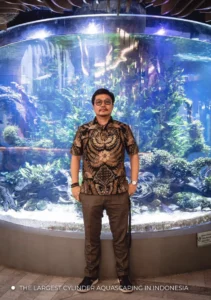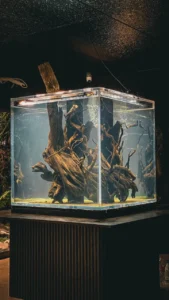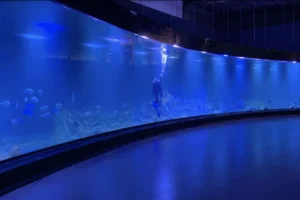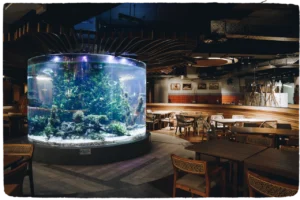
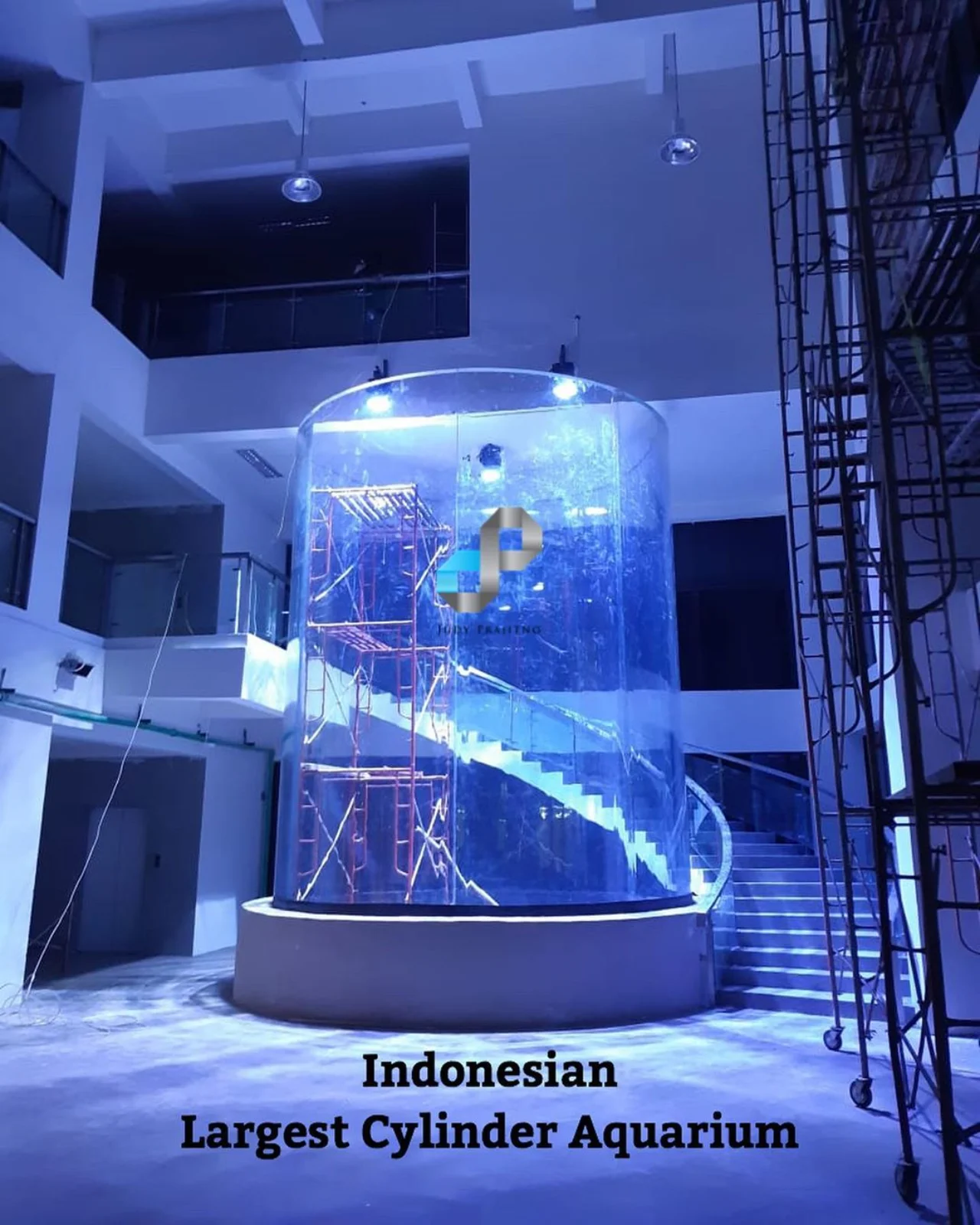
The underwater world covers a significant part of our planet, yet for most people, it remains a world they rarely have the opportunity to experience directly. Oceans, rivers, lakes, and freshwater ecosystems support countless forms of life, but their beauty and complexity often remain hidden beneath the surface.
This is where an aquarium can play a role far beyond visual attraction.
For Indo Akuarium, an aquarium is an opportunity to bring people closer to nature. Through carefully designed aquatic environments, visitors can observe living ecosystems, discover biodiversity, and develop a deeper appreciation for the world beneath the surface.
Bringing the Underwater World Closer
Not everyone has the opportunity to dive into the ocean or explore freshwater ecosystems in their natural environment.
An aquarium creates another way to experience that world.
Through glass, water, light, plants, rocks, and aquatic life, people can observe an ecosystem that would otherwise remain inaccessible. The experience can create curiosity, especially among children and younger generations who may encounter aquatic life for the first time through an aquarium.
For Indo Akuarium, this accessibility is an important part of its broader vision.
The goal is not simply to display aquatic life, but to create an experience that encourages people to look closer and understand the relationship between living organisms and their environment.
From Observation to Appreciation
Environmental awareness often begins with something simple: curiosity.
A child sees a fish and asks where it lives.
A visitor observes an underwater landscape and wonders how such an ecosystem can exist.
Someone discovers a species they have never seen before and begins searching for more information.
These small moments can become the beginning of a deeper appreciation for nature.
When people understand the beauty and complexity of an ecosystem, they may become more conscious of the importance of protecting it.
This is one of the reasons Indo Akuarium views aquarium design as more than an artistic discipline. It can also become a medium for education and environmental awareness.
Nature as the Greatest Teacher
The philosophy behind Indo Akuarium is strongly influenced by the idea that nature is the greatest teacher.
Rather than attempting to impose an artificial appearance on an aquarium, the design process can begin by observing how natural ecosystems work.
Different environments have different characteristics.
A freshwater habitat does not look or function like a coral reef.
A forest stream has a different visual character from a deep aquatic environment.
Understanding these differences allows designers to create environments that feel more authentic and meaningful.
This philosophy is reflected in the various aquatic and landscape concepts developed by Indo Akuarium, including The Habitats, Horizon Reef, The Cliff Spring, The Swamp Forest, Aquascape, and Rain Forest Terrarium.
Each concept explores a different interpretation of nature within a designed environment.
Designing Living Ecosystems
An aquarium is fundamentally different from a static piece of decoration.
A painting remains unchanged after it has been completed.
A sculpture maintains its physical form.
A living ecosystem continues to change.
Plants grow. Fish move. Water circulates. Light changes throughout the day. The relationship between different organisms evolves over time.
This dynamic quality is what makes an aquarium unique.
Designing such an environment requires an understanding of both aesthetics and functionality.
The visual composition needs to be carefully considered, but so do water quality, filtration, lighting, circulation, biological balance, and maintenance.
The beauty people see on the outside is supported by a much more complex system beneath the surface.
The Role of Technology
Technology plays an important role in making modern aquarium environments possible.
Large-scale aquarium projects require careful consideration of materials, structural systems, water management, filtration, lighting, and long-term maintenance.
For Indo Akuarium, technology is not intended to replace nature.
Instead, it serves as a tool that allows natural environments to be recreated and maintained within architectural spaces.
This combination of technology and natural design enables aquatic environments to become larger, more immersive, and more accessible while maintaining the operational requirements of a living ecosystem.
Creating Experiences Through Design
An aquarium can also influence how people experience architecture.
A large aquarium can become the focal point of a hotel lobby.
A carefully positioned installation can transform a restaurant into an immersive dining destination.
A residential aquarium can introduce movement and nature into an interior environment.
A public aquarium can become an educational destination for families and communities.
In each case, the aquarium becomes part of the story of the space.
This approach is particularly important when developing landmark projects, where architecture alone may not be enough to create a memorable visitor experience.
The combination of architecture and aquatic environments can create something more emotionally engaging.
Aquaworld of Indonesia
This philosophy connects directly with Indo Akuarium’s larger vision of Aquaworld of Indonesia.
Aquaworld of Indonesia represents an ambition to make the underwater world more accessible to society while showcasing the extraordinary aquatic heritage of Indonesia.
As an archipelagic nation, Indonesia possesses remarkable marine and freshwater biodiversity.
Bringing that diversity closer to people through thoughtfully designed aquatic environments can create opportunities for education, tourism, recreation, and environmental awareness.
The aquarium therefore becomes a bridge.
On one side is the world people know.
On the other is the underwater world that remains largely unexplored by them.
The experience connects the two.
More Than Entertainment
Aquariums are often associated with entertainment, and there is certainly value in creating spaces that bring joy and wonder to visitors.
But their potential can extend much further.
An aquarium can become a place where people learn about ecosystems.
It can introduce younger generations to biodiversity.
It can inspire conversations about conservation.
It can demonstrate the complexity of aquatic environments.
And it can remind visitors that human life is deeply connected to the natural world.
For Indo Akuarium, these possibilities are part of what makes aquarium design meaningful.
The objective is not only to create something beautiful.
It is to create something that has a lasting impact on the people who experience it.
Designing With Responsibility
Creating an aquatic environment also brings responsibility.
Living organisms depend on carefully maintained conditions. Water quality, ecosystem balance, energy consumption, and maintenance all need to be considered as part of the design process.
This is why sustainability should not be treated as an afterthought.
A well-designed aquarium should consider how efficiently it can operate, how practical it is to maintain, and how its systems can support the long-term health of the ecosystem.
This balance between beauty, technology, efficiency, and environmental responsibility is an important part of creating aquatic environments that can endure.
A Different Way to See Nature
Perhaps the most powerful role of an aquarium is its ability to change the way people see nature.
Someone may walk into a room simply expecting to see an aquarium.
Instead, they encounter a living landscape.
They see movement.
They discover unfamiliar species.
They notice the relationship between plants, rocks, water, and animals.
For a moment, the boundary between architecture and nature becomes less obvious.
That experience can create a lasting impression.
And sometimes, that impression is enough to make someone care a little more about the natural world.
Looking Beneath the Surface
The philosophy of Indo Akuarium can be summarized through a simple idea:
Same Planet. Different World.
We share the same planet, but the world beneath the surface remains largely unknown to many of us.
Through aquarium design, Indo Akuarium seeks to make that world more accessible.
By combining art, technology, engineering, and an understanding of nature, the company creates living environments that do more than occupy architectural spaces.
They tell stories.
They create experiences.
They inspire curiosity.
And ultimately, they help bring people closer to nature.
Because when we learn to appreciate the beauty of the world beneath the surface, we may begin to understand why protecting it matters.